Balochistan schools' body welcomes ban on carbonated drinks on campus

All Balochistan Progressive Private Schools Association (ABPPSA) said on Saturday the body would comply with a government ban on the sale and use of sugary drinks at schools and universities in the impoverished southwestern province. (AP)
Updated 16 March 2019
Follow

Balochistan schools' body welcomes ban on carbonated drinks on campus

  • Chief Minister Balochistan imposed “complete bar” on sale of carbonated drinks in schools and colleges on Friday
  • President of All Balochistan Progressive Private Schools Association assured compliance

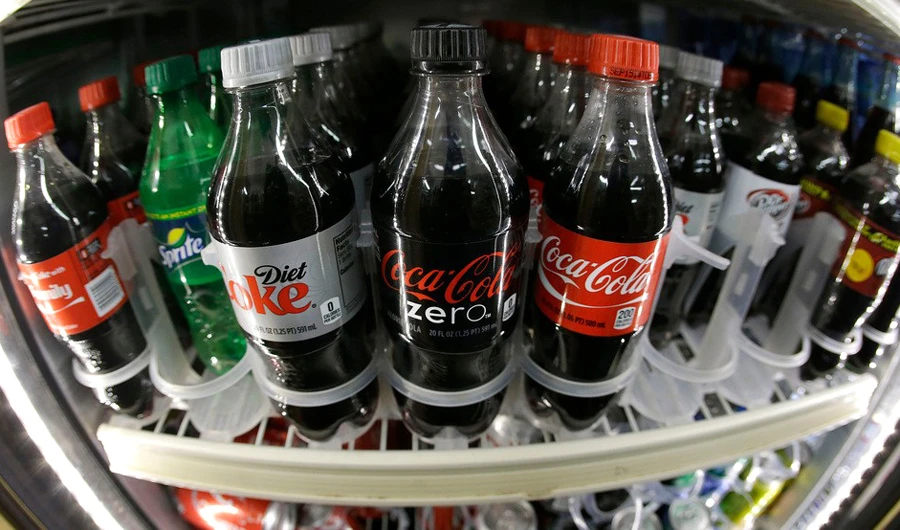
KARACHI: The President of All Balochistan Progressive Private Schools Association (ABPPSA) said on Saturday the body would comply with a government ban on the sale and use of sugary drinks at schools and universities in the impoverished southwestern province.

Public health officials around the world have tied soda drinking to a host of health problems in children.

Balochistan is one of the poorest provinces in Pakistan and has some of the worst health indicators in the country. Malnutrition rates are high, making children especially vulnerable to diseases like malaria, diarrhea, dysentery and typhoid.

“The government hasn’t officially communicated the orders [to us yet] but if there is a ban, we will comply,” Muhammad Nawaz Pandrani, chairman of the ABPPSA, told Arab News.

Muhammad Khan Lehri, Balochistan government's adviser on education, told Arab News that Chief Minister Balochistan Jam Kamal had imposed a “complete bar” on the trade and use of carbonated drinks in schools and colleges during a meeting with provincial food authority officials on Friday. The sale and use of Gutka, or chewing tobacco, and Ajinomoto salt, were also banned in the province.

“The use of substandard food items is having a damaging impact on the minds of children and obstructing their body and cerebral growth,” Lehri said, adding that he would issue directives to schools and colleges to implement the ban on sugary drinks immediately. An awareness campaign is also in the works to educate citizens about using harmful food items, he said.

Medical experts also welcomed the ban on the sale and use of corroborated drinks in educational institutes.

“Carbonated and energy drinks result in high blood sugar and are also the prime cause of obesity in children and youth,” Dr Ismail Mirwani, Senior Vice President at the Pakistan Medical Association Balochistan, told Arab News. “We are witnessing increasing rate of heart attacks in youths … the outcome of bad lifestyle and consuming foods and drinks that are hazardous to health,” he said.

He urged the government to enact legislation on sugary drinks and punish violators.

‘Terrified’ Sydney man misidentified as Bondi shooter turns to Pakistan consulate for help

Updated 4 sec ago
Follow

‘Terrified’ Sydney man misidentified as Bondi shooter turns to Pakistan consulate for help

  • The man says he received death threats after his images were spread widely on social media
  • He sought consular help after relatives in home country began receiving alarmed phone calls

SYDNEY: A Sydney man said he had received death threats and was “terrified” to leave his home Monday after his photo was widely shared online as the gunman responsible for the Bondi Beach shooting.

A father and son duo opened fire on a Jewish festival at Australia’s best-known beach on Sunday evening, killing 15 people, including a child, and wounding 42 more.

Authorities have condemned the attack as an act of terrorism, though they have not named the two shooters — one killed at the scene, and the other now in hospital.

However, Australian public broadcaster ABC said the alleged assailant was Naveed Akram from the western Sydney suburb of Bonnyrigg, quoting an anonymous official, and other local media reported that police had raided his home.

Photos of a beaming man in a green Pakistan cricket jersey pinged across social media.

Some of the posts were shared thousands of times, drawing vitriolic comments.

But the photo was taken from the Facebook profile of a different Naveed Akram, who pleaded Monday for people to stop the misinformation in a video published by the Pakistan Consulate of Sydney.

“Per media reports, one of the shooters’ name is Naveed Akram and my name is Naveed Akram as well,” he said in the video.

“That is not me. I have nothing to do with the incident or that person,” he said, condemning the “terrible” Bondi Beach shooting.

“I just want everyone’s help to help me stop this propaganda,” he said, asking for users to report accounts that misused his photo, which he had shared in a 2019 post.

’ LIFE-THREATENING

The 30-year-old, who lives in a northwestern suburb of Sydney, told AFP he first heard around 9:30 p.m. on Sunday that he had been falsely identified as the shooter.

“I could not even sleep last night,” Akram told AFP by phone, adding he deleted all the “terrible” messages he got.

“I’m terrified. I could not go outside, like it’s a life-threatening issue, so I don’t want to risk anything... my family is worried as well, so it’s quite a hard time for me.”

He asked the Pakistan Consulate to put out the video because relatives in the country’s Punjab province were getting phone calls as well.

“It was destroying my image, my family’s image,” he said.

“People started to call them. They were worried, and they have told the police over there.”

The Pakistan native moved to Australia in 2018 to attend Central Queensland University and later did a masters at Sydney’s Holmes Institute.

Today he runs a car rental business, and he said Australia is “the perfect country.”

“I love this country. I have never had any safety issues here, like everyone is so nice, the people are so nice here,” Akram said.

“It’s only this incident that has caused me this trauma.”